







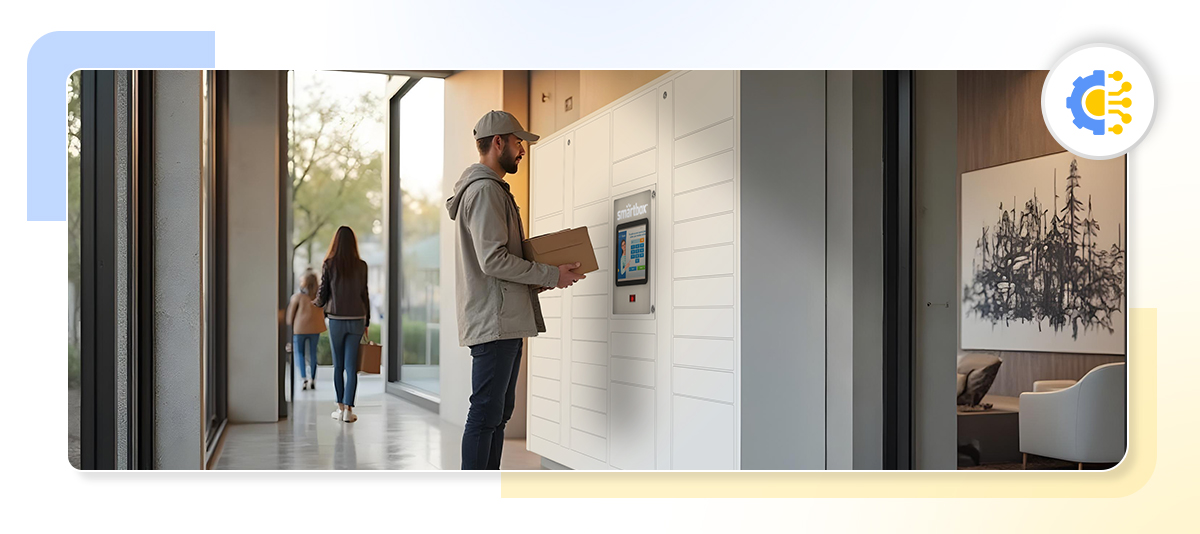

Smart lockers are no longer just a futuristic idea – they’re fast becoming a cornerstone of modern logistics. From busy urban neighborhoods to large-scale warehouse hubs, these intelligent systems are reshaping how parcels are delivered, stored, and collected. Whether it’s improving last-mile delivery, enhancing package tracking, or boosting customer satisfaction, smart logistics lockers offer undeniable value to both consumers and logistics providers.
But let’s be honest: integrating smart package lockers into real-world logistics operations – especially in complex 3PL ecosystems – isn’t as simple as plugging in a new device and walking away. There are real hurdles to overcome. Think: system compatibility issues with existing transportation management systems, ongoing maintenance concerns, security risks, and even staff training requirements. Not to mention the very real fear of adoption barriers like data privacy and scalability headaches.
If you’re a logistics provider or part of a third-party logistics (3PL) network trying to make sense of it all, this blog is for you. We’ll unpack the key smart locker integration challenges, explore their impact on delivery optimization and operational efficiency, and offer practical strategies to overcome them. Whether you’re navigating technology adoption, trying to cut costs, or simply want to improve the user experience, we’ll show you how to make smart locker solutions work for your business, not against it.
Compare Smart Locker Delivery Management Features With Traditional Methods
Smartbox Lockers are redefining the future of delivery management by offering a cutting-edge, automated, and secure system that enhances convenience, efficiency, and accountability. With features like 24/7 access, digital tracking, automated notifications, and reduced reliance on manual labor, Smartbox Lockers offer a seamless solution for handling deliveries compared to traditional, labor-intensive methods.
| Feature | Smartbox Lockers | Traditional Delivery (Mailroom/Counter) |
|---|---|---|
| Access | Digital access via PIN, QR code, or app, available 24/7 and contactless | Manual key handovers or staff assistance, with limited hours and physical presence required |
| Notifications | Automated notifications (email/SMS) when packages arrive | Manual notifications (phone calls or paper slips) |
| Security | Electronic locking systems, real-time monitoring, and digital audit trails | Mechanical locks with a higher risk of loss or tampering, and limited tracking capabilities |
| Tracking | Comprehensive digital tracking with real-time visibility and full audit logs | Reliance on manual logs or spreadsheets, prone to human error and incomplete data |
| Efficiency | Lower labor costs, freeing up staff for other tasks, and quicker pickup times | High labor costs, requiring more time and effort from staff and recipients |
| Capacity | Adaptable to different package sizes and space-optimized for varying delivery volumes | Fixed compartments, prone to overflow and inefficient space utilization |
| Management | Remote monitoring with software-controlled access and rule management | Manual key management and significant administrative workload |
Benefits of Smartbox Lockers:
- Convenience & Experience: Recipients enjoy instant, 24/7 access, improving satisfaction and convenience.
- Cost & Labor Savings: Automated processes drastically cut down on staff time and operational costs.
- Security & Accountability: Enhanced digital control and complete audit trails reduce the risk of theft or loss.
- Scalability: Smartbox Lockers efficiently handle varying delivery volumes, offering flexibility that traditional systems can’t match.
- Sustainability: By reducing the need for delivery vans to circle back, Smartbox Lockers help lower emissions and contribute to a more sustainable delivery model.
Drawbacks of Traditional Methods:
- Labor-Intensive: Each delivery requires significant staff involvement, making traditional systems high-maintenance.
- Security Risks: Vulnerable to lost keys, unauthorized access, and tampering.
- Inefficient & Inflexible: Limited hours and inefficient space use lead to higher chances of package loss or damage.
Smartbox Lockers represent the future of delivery management with AI-enhanced efficiency, security, and scalability. By choosing Smartbox Lockers, businesses can streamline operations, reduce costs, and offer a superior experience for recipients. Traditional delivery systems are simply no match for the next-generation solution provided by Smartbox Lockers.
How the Smart Locker Revolution is Disrupting the Logistics Industry
Gone are the days when parcels sat on porches or got rerouted endlessly due to missed deliveries. Smart lockers – secure, automated storage systems – are rewriting the rules of last-mile delivery logistics. Found everywhere from high-rise apartments and college campuses to busy retail stores and transit hubs, these smart package lockers offer a seamless, contactless way to send and receive goods.
For logistics and supply chain management professionals, the benefits are clear. Smart locker integration brings a host of operational advantages, including:
- Dramatically lower last-mile delivery costs
- A sharp decline in failed deliveries and reattempts
- A more frictionless, reliable customer experience
- Higher levels of parcel security and inventory control
The promise of smart logistics lockers is exciting, but getting from point A to point B is no small feat. Transitioning from traditional courier models to a locker-driven ecosystem requires more than just installing hardware. It demands smart planning, a deep understanding of 3PL integration, and the ability to overcome various technical hurdles, system compatibility concerns, and even user experience design challenges. As this revolution gains momentum, logistics providers must evolve – not just with the technology itself, but with the processes, teams, and tools that support it.
Solving the Key Challenges of Smart Locker Integration in Logistics
Integrating smart lockers into the heart of your logistics operations sounds like a tech dream – until you’re knee-deep in legacy code, mismatched APIs, and resistant delivery teams. While smart parcel locker technology has immense potential to streamline 3PL operations, boost delivery optimization, and enhance the user experience, the road to full-scale technology adoption isn’t always smooth.
Let’s break down the biggest hurdles logistics providers face when rolling out smart locker systems and how to navigate them effectively.
Technical Hurdles
1. Legacy System Integration
Many logistics providers and third-party logistics (3PL) companies still rely on legacy transportation management systems (TMS) and outdated IT infrastructure. These older systems were never built to connect with the cloud-based APIs that power most modern smart logistics lockers. Bridging this gap often requires custom middleware, IT architecture overhauls, or significant investments in system compatibility and modernization.
2. Data Security and Privacy
Smart lockers don’t just store parcels – they process sensitive customer data, from personal addresses to real-time shipment tracking details. That makes data security and privacy compliance top priorities. End-to-end encryption protocols, secure user authentication, and adherence to privacy laws like GDPR and CCPA are essential to protect both businesses and consumers from cybersecurity risks.
3. Real-Time Data Synchronization
Automation in logistics only works when all systems talk to each other – fast. For smart locker integration to function smoothly, there needs to be seamless, real-time synchronization between inventory management, order fulfillment, and routing software. Any delays, mismatched data, or system silos can lead to failed deliveries, inaccurate inventory records, and a drop in customer satisfaction.
System Compatibility
1. Diverse Locker Vendors and Standards
The smart locker market is booming – and fragmented. From hardware to software, different vendors come with different communication protocols and user interfaces. This lack of standardization makes it difficult for logistics providers to create a unified smart locker supply chain strategy, especially when juggling multiple locker types across different regions.
2. API and Protocol Incompatibility
APIs are the glue that holds modern logistics technology together. But when smart locker APIs are poorly documented, inconsistent, or incompatible with existing logistics and supply chain management platforms, integration becomes a drawn-out, error-prone process that slows down deployment and adds to operational inefficiency.
3. Scalability Issues
What works for ten lockers in one city may not work for 1,000 lockers across a nationwide network. If the smart locker solution isn’t modular, flexible, or cloud-scalable, you’ll hit a wall. Scalability is key for future-proofing your operations — from last-mile delivery logistics to high-volume 3PL integration.
Operational Disruptions
1. Process Redesign
Introducing parcel delivery lockers means reimagining your delivery workflows. Couriers must learn new drop-off protocols, digital access systems, and potentially new routing methods. Without clear process maps and onboarding, confusion can derail even the best logistics technology rollouts.
2. Change Management
One of the biggest hidden challenges? People. Employees often view new tech as a threat to their roles, routines, or comfort zones. Implementing smart storage solutions means addressing these fears head-on with solid change management, ongoing training, and transparent communication to avoid productivity dips and resistance.
3. Service Downtime and Maintenance
Even the smartest lockers can go offline. And when they do, last-mile delivery solutions grind to a halt. Whether it’s a software bug, power outage, or wear and tear, maintenance issues can trigger delays, bottlenecks, and complaints. Having proactive diagnostics and rapid-response teams is vital to avoid customer dissatisfaction.
Steps To Integrate Smart Locker System with Courier Partners
Integrating a smart locker network with courier partners requires strategic planning, advanced technology selection, strong partnerships, and robust software connectivity to ensure automated notifications, secure contactless access, real‑time tracking, and end‑to‑end visibility. Smartbox Lockers not only support these requirements but also drive efficiency, security, and measurable operational value across logistics, residential, and retail environments.
Step‑by‑Step Guide to Integration (with Smartbox Lockers)
1. Planning & Strategy
Define Goals:
Evaluate your logistics objectives – such as enhancing last‑mile efficiency, accelerating pickups, reducing failed deliveries, and elevating customer experience.
Identify Locations:
Choose high‑footfall, secure areas with reliable power and connectivity to deploy Smartbox locker hubs designed for indoor and outdoor use.
Courier & E‑commerce Partnerships:
Engage courier services and marketplace partners to establish delivery standards, operational SLAs, and integration readiness for automated locker access.
Smartbox Advantage:
Smartbox lockers are customizable to space and volume requirements, making them ideal for dense urban, residential, or enterprise settings.
2. Technology Selection & Setup
Choose the Right Locker System:
Select a tech‑enabled smart locker platform that delivers secure, automated parcel storage and retrieval.
Smartbox Standout Features:
- Modular and Scalable Hardware designed to adapt to various delivery and environment needs.
- Secure & Contactless Pickup with encrypted access and customizable authentication.
- Real‑time Usage Insights for operational optimization.
Install the physical locker infrastructure with minimal operational disruption, including outdoor/weather‑resistant units where applicable.
3. Software Integration & API Connectivity
Connect Systems Seamlessly:
Work with Smartbox’s open APIs to integrate locker control software with warehouse, carrier, or order management systems.
Automated Data Flow:
Enable:
- Delivery status synchronization
- Real‑time tracking
- Dynamic access code generation
- Automated notifications via SMS/email/app
Smartbox’s APIs already support integrations with enterprise software and delivery ecosystems.
4. Courier Workflow Integration
Standard Operating Procedures (SOPs):
Develop SOPs so couriers can easily:
- Authenticate with the locker
- Scan shipment barcodes
- Deposit packages securely
- Trigger instant notifications to recipients
Training & Adoption:
Provide simple training modules for couriers and support guides for partners and end customers.
Smartbox Workflow Support:
Smartbox’s user interface and management dashboard make operational changes intuitive and visible in real time.
5. Management & Optimization
Ongoing Monitoring:
Use analytics dashboards to track locker utilization, delivery patterns, and maintenance needs.
Security & Compliance:
Implement best practices such as encryption, access logs, and data privacy compliance.
Continuous Improvement:
Leverage Smartbox’s analytics to refine placement, utilization, and courier routing over time for maximum efficiency.
Why Smartbox Lockers Stand Out in Logistics
End‑to‑End Smart Locker Innovation
Smartbox Lockers go beyond physical hardware – they are built as secure, automated, scalable locker ecosystems that enhance last‑mile performance across partners.
Optimized for Modern Delivery Demands
- Real‑Time Visibility into parcel status and usage patterns
- Secure, Contactless Access configurable with QR codes, PINs, or mobile links
- Modular Designs for retail, residential, logistics hubs, or enterprise campuses
- 24/7 Self‑Service Pickup greatly improves user convenience and reduces timed deliveries
- Robust Security & Customization, including tamper resistance, multilingual screens, and brand integration options
Transformative Last‑Mile Outcomes
- Reduced delivery times and missed drop‑offs
- Lower labor and routing costs
- Elevated customer satisfaction and parcel security
All while serving as a centralized hub for deliveries in urban, residential, and commercial ecosystems.
By integrating Smartbox Lockers into your delivery and courier workflows – backed by sophisticated APIs, secure access controls, and powerful analytics – you create a future‑ready, highly visible, and data‑driven last‑mile delivery ecosystem that benefits carriers, partners, and end users alike.
From Now to Next: The Smart Locker-Powered Future of Logistics
The rise of e-commerce, hyper-local deliveries, and urban congestion has made one thing crystal clear — smart lockers are no longer optional; they’re essential to the evolution of last-mile logistics. As consumers demand faster, safer, and more flexible delivery options, smart package lockers are rapidly becoming a cornerstone of modern logistics technology.
For logistics and 3PL providers, the question isn’t if they should adopt smart locker systems, but how well they’ll integrate them. Those who tackle the integration challenges head-on – from system compatibility and data security to training requirements and technical hurdles – will emerge stronger, more agile, and more competitive.
By embracing open, modular systems, investing in integration platforms, and building a culture that values technology adoption and continuous improvement, forward-thinking companies can unlock major advantages. The future belongs to those who can combine innovation with execution. With the right strategy, smart locker integration becomes more than just a logistics upgrade – it becomes a catalyst for growth, a differentiator in the market, and a stepping stone toward a truly intelligent, resilient, and data-driven supply chain ecosystem.
Paving the Way Ahead
Integrating smart lockers into modern logistics operations isn’t without its challenges, but for forward-thinking 3PL providers and logistics teams, it’s a strategic leap worth taking. By addressing technical hurdles, ensuring system compatibility, and optimizing operational workflows, companies can transform integration roadblocks into opportunities for innovation, efficiency, and growth.
With the right technology, partners, and mindset, smart locker integration empowers you to offer faster, more secure, and cost-effective last-mile delivery solutions – all while boosting customer satisfaction and staying ahead in an increasingly competitive marketplace.