







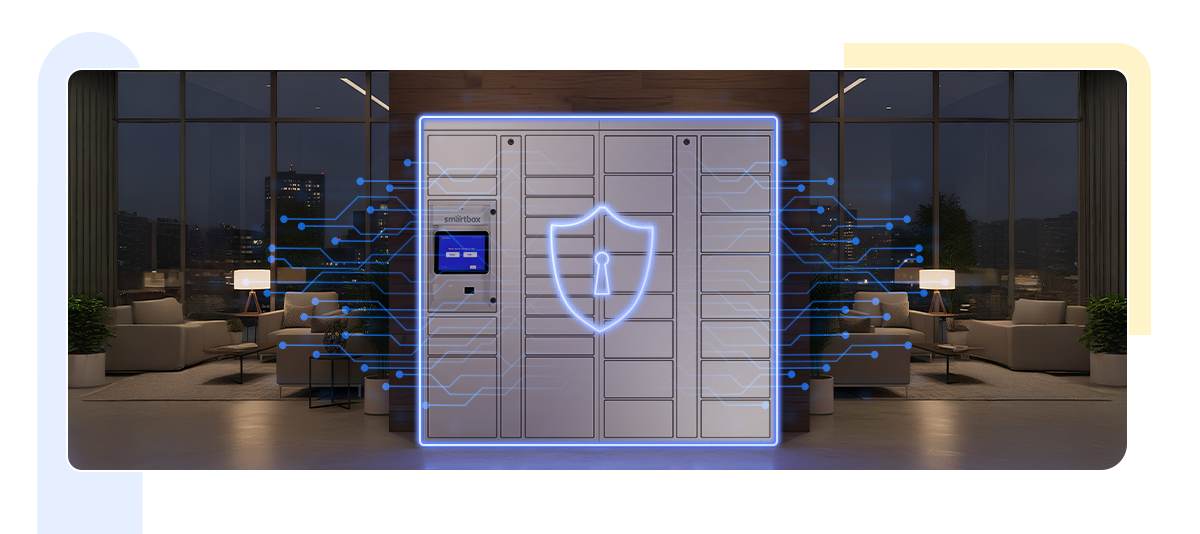

Smart locker systems are transforming the way we handle everything from package deliveries to asset management. For logistics providers and enterprises, they offer unmatched convenience and efficiency. But with this new level of connectivity comes a new set of challenges. How secure are these systems, really? It’s time we talked about locker cybersecurity and how to protect these vital assets from emerging threats.
As we integrate more technology into our daily operations, the conversation must shift towards building a robust smart security system. The convenience of smart lockers cannot come at the cost of security. This post will explore the most pressing parcel locker risks and outline the essential components of a secure smart locker system for parcel management.
What Are Common Security Risks With Automated Parcel Lockers
Common security risks associated with automated parcel lockers can be broadly categorized into two key areas: cybersecurity threats targeting the software and network infrastructure, and physical security risks related to the locker units themselves.
Cybersecurity Risks
Automated lockers depend on network connectivity, making them vulnerable to various cyber threats.
- Unauthorized Access: Hackers may exploit weak passwords, stolen credentials (often obtained through phishing), or vulnerabilities in access control systems to break into lockers and steal packages.
- Data Breaches: Automated locker systems collect a significant amount of sensitive user data, including personal details, addresses, and delivery histories. If encryption is weak or cloud storage is misconfigured, this information could be exposed, leading to identity theft or privacy violations.
- Malware and Ransomware: As Internet of Things (IoT) devices, lockers are susceptible to malware attacks. A cyberattack could incapacitate the entire locker network, potentially leading to operational disruptions unless a ransom is paid.
- System Manipulation: Cybercriminals could tamper with access logs to cover up theft or exploit insecure application programming interfaces (APIs) to gain unauthorized entry to the system.
- Authentication Issues: The use of simple PIN codes (e.g., “1234”) or easily spoofed QR codes increases the likelihood of unauthorized access, as these can be easily guessed or intercepted.
Physical Security Risks
While technology offers many advancements, physical vulnerabilities still pose significant threats to automated parcel lockers.
- Locker Tampering/Break-ins: Intruders can force open locker compartments, especially if the hardware is made of lightweight materials or features weak hinges.
- Location Vulnerability: Placing lockers in poorly lit, isolated, or unmonitored areas increases the risk of vandalism and theft.
- Lack of Surveillance: The absence of integrated surveillance cameras or real-time monitoring makes it difficult to resolve disputes, identify culprits, or track suspicious activities.
- Power Outages/System Glitches: A lack of reliable backup power (such as an uninterruptible power supply) or software bugs could cause lockers to malfunction, potentially trapping items inside or mistakenly allowing unauthorized access.
- Courier Errors: Couriers may accidentally leave oversized parcels outside the lockers or fail to properly utilize the system, exposing packages to theft.
By addressing these cybersecurity and physical security risks, businesses can enhance the safety and reliability of their automated locker services for users.
Building a Digital Fortress: Components of Secure Smart Lockers
Protecting against these threats requires a proactive and multi-layered approach to security. Simply installing a locker system is not enough; you need to ensure it’s a truly secure smart locker. So, what should you look for?
Robust Access Control and Security Solutions
The foundation of smart lockers’ security is controlling who can access the system and when. Modern systems go beyond simple keypads. Look for multi-factor authentication (MFA), biometric scanners, and secure mobile app credentials. A strong system ensures only verified users can interact with the lockers.
End-to-End Encryption
All data, whether it’s at rest on a server or in transit between the locker and the cloud, must be encrypted. Encryption acts as a final line of defense, making data unreadable and useless to anyone who might intercept it. This is a non-negotiable feature for any secure smart locker systems for parcel management.
Real-Time Reporting and Monitoring
You can’t protect what you can’t see. A system with real-time reporting capabilities allows you to monitor all activity across your locker network. You can get instant alerts for suspicious events, such as multiple failed access attempts or a door being forced open. This allows your security team to respond to threats immediately.
How Is User Data Protected In Automated Parcel Lockers
User data in automated parcel lockers is safeguarded through a comprehensive, multi-layered security strategy. This includes end-to-end encryption, secure user authentication methods (such as unique QR codes or PINs), automated software updates, tamper-resistant physical features, and strict compliance with privacy regulations like GDPR and PIPEDA.
These measures ensure that sensitive data, including contact information and access codes, remains encrypted both during transmission and when stored, with access granted only to authorized users. Additionally, audit trails are maintained to ensure accountability.
Key Security Measures:
- Encryption: All data, including delivery information and access credentials, is encrypted (e.g., AES-256) during transmission to the cloud and while stored, preventing unauthorized interception.
- Secure Access: Users are provided with unique, temporary codes (PINs or QR codes) via SMS or email for one-time access, ensuring that only the intended recipient can open the locker.
- Authentication & Authorization: Secure login processes, multi-factor authentication for system management, and role-based access control for staff ensure proper access governance.
- Software Security: Automated updates and patching are implemented regularly to address vulnerabilities, with alignment to security standards such as ISO 27001.
- Physical Security: The lockers are constructed from durable, tamper-resistant materials and are often equipped with integrated CCTV cameras for real-time monitoring.
- Privacy & Compliance: Data handling processes are fully compliant with privacy regulations like GDPR and PIPEDA. This includes logging, anonymization, and prevention of unauthorized data sharing or misuse.
- Audit Trails: Comprehensive logs record details of locker access (who, when, and where), ensuring traceability and supporting incident investigations.
How It Works Together:
- Delivery: A carrier deposits a package into the locker, and the system logs the delivery.
- Notification: The user receives a unique access code or QR code for package pickup via SMS or email.
- Pickup: The user enters the access code or scans the QR code on the locker’s interface.
- Verification: The system verifies the access code, sending an electronic signal to unlock the designated compartment.
- Security: All interactions are encrypted, logs are maintained, and CCTV cameras monitor the area to ensure ongoing security.
This robust security framework guarantees the protection and privacy of user data while maintaining a seamless and secure parcel pickup process.
The Role of Smart Locker Cyber Security Solution Providers
Most companies don’t have a team of in-house experts dedicated to locker security. That’s where specialized smart locker cybersecurity solution providers come in. These smart locker partners offer the expertise and tools needed to secure your investment and protect your operations.
Smart Locker Vulnerability Assessment Service
How do you know if your system has security gaps? A smart locker vulnerability assessment service is the answer. Security experts will conduct rigorous testing to identify potential weaknesses in your hardware, software, and network configuration. It’s like a health check-up for your smart security system, providing a detailed report and recommendations for shoring up your defenses.
Cloud-Based Access Control and Management
Leading providers offer powerful, cloud-based platforms for managing your entire locker network. This centralized approach simplifies security management. From a single dashboard, you can grant or revoke access, monitor usage, and deploy security updates across all your smart locker systems. Cloud-based access control offers flexibility and scalability while maintaining high security standards.
Implementing Your Enterprise Smart Locker Security Strategy
Securing your smart locker network is a critical part of modern parcel locker security for logistics providers and other enterprises. It’s about protecting your assets, your customers, and your brand’s reputation. By understanding the risks and investing in the right solutions, you can harness the full power of smart locker technology without exposing your organization to unnecessary threats.
Start by asking potential vendors tough questions about their security protocols. Prioritize systems that offer end-to-end encryption, multi-factor authentication, and real-time reporting. Most importantly, consider partnering with a provider who offers ongoing support, including regular security audits and a smart locker vulnerability assessment service.
By taking a proactive approach to smart locker cybersecurity, you can ensure your system remains a valuable asset, not a potential liability. Protect your systems from threats today to secure your operations for tomorrow.
Smartbox: A Leader in Smart Locker Solutions
When it comes to secure and innovative smart locker systems, Smartbox stands out as an industry leader. Recognized for its commitment to locker cybersecurity, SmartBox offers cutting-edge solutions tailored for parcel management, logistics providers, and enterprises of all sizes.
What sets Smartbox apart is its comprehensive approach to security. Their smart locker systems are equipped with advanced access control and security solutions, including multi-factor authentication and biometric options, ensuring only authorized users can access sensitive parcels and data.
Smartbox also excels in real-time reporting, delivering instant notifications and updates that empower organizations to quickly respond to any irregularities or threats. This capability is especially valuable for businesses seeking proactive risk management and streamlined operations.
In addition, Smartbox leverages cloud-based access control technology, giving administrators the flexibility to manage, monitor, and update locker access from anywhere. Their cloud platform ensures high scalability, robust encryption, and easier integration with enterprise IT systems.
By prioritizing security-focused innovation, Smartbox continues to set the standard for secure smart locker systems in today’s digital landscape.