







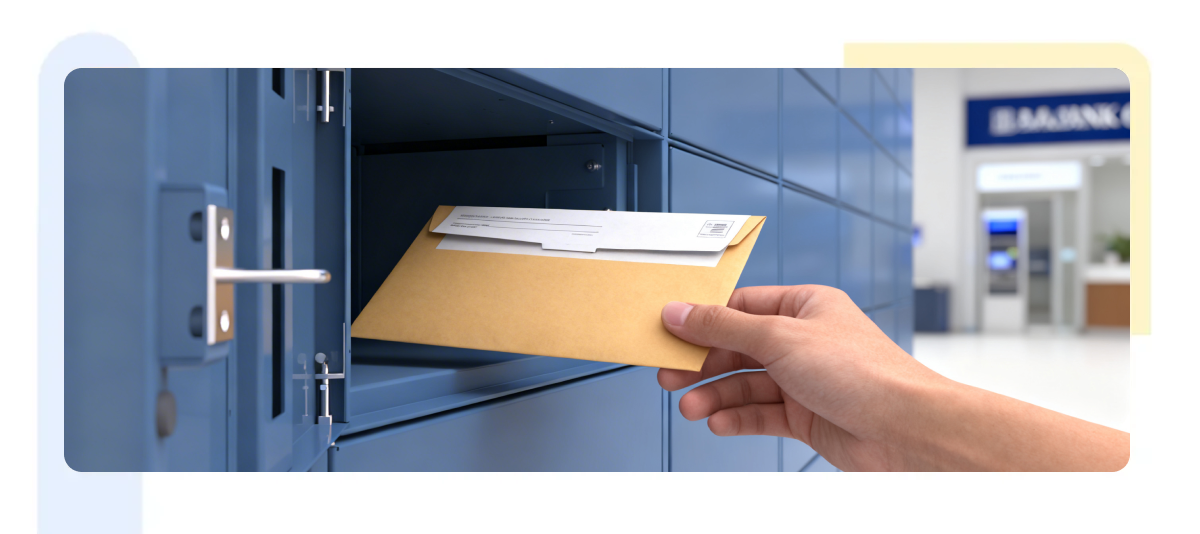

Picture this: a customer applies for a home loan on a Tuesday evening. Traditionally, they’d have to visit the branch during working hours, hand over physical documents, wait for a callback, return again for verification, and repeat the cycle multiple times. For both the customer and the branch team, it’s exhausting.
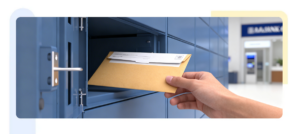
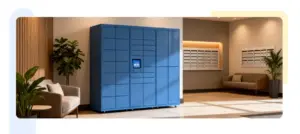
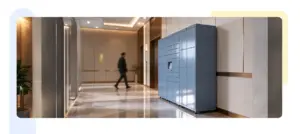
Smart lockers for banks also called digital bank lockers or automated lockers for banking are intelligent, connected storage units installed within or adjacent to bank branches. They enable secure, contactless document exchange, card delivery, and asset handover all without requiring a teller or branch staff to be physically present.
Unlike traditional safety deposit boxes, self-service branch lockers are software-connected, IoT-enabled systems with features like biometric access, PIN authentication, real-time notifications, audit trails, and integrations with core banking platforms. They are purpose-built for bank branch automation in a world where customers expect speed, security, and digital-first experiences.
handles documents, verifies identities, notifies customers, and maintains an immutable log of every transaction, without ever needing a coffee break.
of banking customers prefer self-service options for routine transactions
reduction in branch staff time spent on document handling after smart locker
deployment
customer access capability no branch hours required for document pickup
Why Banks Are Accelerating Branch Automation Right Now
The pressure on bank branches has never been more intense. Branch foot traffic patterns have shifted dramatically. Customers expect the same seamless digital experience they get from fintech apps but for high-value, high-trust transactions that still require physical documents or assets.
Meanwhile, branch operations management teams are grappling with tighter staffing budgets, rising compliance demands, and the operational complexity of handling sensitive documents manually. The result? Bottlenecks, errors, and frustrated customers and employees alike.
Enter banking workflow automation and specifically, smart locker systems as a cornerstone of streamlining banking services.
Key Use Cases: How Smart Lockers Are Used Across Banking Operations
One of the most common questions we receive from branch operations managers is: “Are smart lockers just for storing debit cards?” The answer is a resounding no. The range of applications for automated document handling in banking is expansive and growing.
Loan Document Exchange Systems
Customers submit mortgage, personal loan, or auto loan documentation through a secure locker. Branch staff verify and process at their own pace. No need for simultaneous scheduling the locker is always available for after-hours document pickup at bank branches.
Card & Token Delivery
Debit cards, credit cards, and hardware authentication tokens are pre-loaded into the locker. Customers receive a one-time access code via SMS or banking app, collect their card in under 60 seconds. No queue. No signature. Full audit trail.
Contactless Document Transfer
KYC documents, account opening forms, and signed agreements are exchanged contactlessly between customers and branch staff critical in a post-COVID world and invaluable for immunocompromised or mobility-limited customers.
24/7 Customer Service for Banking
Branches are closed at 6pm, but your customer’s need isn’t. Smart lockers provide genuine 24/7 customer service for banking enabling pickups, drop-offs, and collections at any hour without any staff present.
Secure Internal Asset Handover
Branch-to-branch staff can handover sensitive internal assets keys, access cards, sensitive reports via smart lockers with employee access control and full chain-of-custody documentation. Ideal for bank staff workflow automation.
Cheque Book & Statement Distribution
Physical cheque books and confidential account statements are securely stored and retrieved by verified customers eliminating the risk of misdelivery and the embarrassment of handing documents to the wrong person at a busy teller window.
Essential Features of a Secure Locker System for Banking
Not all smart lockers are equal. When evaluating commercial banking solutions for document exchange, your procurement team needs to look beyond the hardware. The software, integrations, and compliance capabilities are where the real differentiation lies.
- Multi-factor Authentication: PIN + OTP, biometric fingerprint, or QR code from banking app. No single-factor access for sensitive banking documents.
- Real-Time Audit Trail: Every access event open, close, failed attempt, timeout is timestamped and logged to a tamper-proof ledger, meeting regulatory compliance for banks.
- Core Banking Integration: API connections to your existing CRM, loan origination system, or document management platform. The locker should trigger workflows automatically.
- Remote Management Dashboard: Branch managers monitor locker capacity, status, and access logs from a centralised portal essential for branch operations management.
- Configurable Compartment Sizes: From slim slots for credit cards to deep compartments for physical contracts. Flexible sizing is non-negotiable for practical deployment.
- Customer Notification Engine: Automated SMS, email, and in-app push notifications when items are loaded, collected, or if a time-window is approaching. Drives customer experience in banks.
- Encryption at Rest & In Transit: All data transmitted between the locker, management platform, and banking systems must be end-to-end encrypted. Non-negotiable for banking document security.
- Vandal-Resistant Hardware: Grade-A steel construction, anti-tamper sensors, and CCTV integration. Physical security reinforces digital security.
Smart Lockers in Action: How Smartbox iBox Is Setting the Standard
Research and frameworks are useful. But nothing makes the case for automated lockers for banking more powerfully than a real deployment at real scale. Smartbox’s iBox is one of the most widely referenced implementations in the industry, and for good reason.
Smartbox is a specialist provider of intelligent locker systems built specifically for high-security, high-compliance enterprise environments. Their flagship product, iBox, is an IoT-connected smart locker terminal purpose-engineered for bank branch deployment. It combines secure compartment access, OTP and biometric authentication, real-time audit logging, and API-level integration with core banking platforms into a single deployable unit.
iBox handles the full range of banking deliverables: card and cheque book distribution, loan document exchange, signed agreement collection, internal asset handover between staff, and after-hours customer pickup. Every interaction is logged, timestamped, and traceable, with zero teller involvement required at the point of collection.
The research context matters here. According to McKinsey, banks that invest in branch automation technologies reduce per-transaction operational costs by up to 40%. A 2023 Gartner survey found that 71% of retail banking customers now prefer self-service channels for routine interactions, up from 54% in 2019. Deloitte research indicates that document-handling errors and delays in physical banking workflows account for nearly 23% of all customer complaints in retail banking. These are the exact gaps Smartbox iBox was designed to close.
Case Study: Smartbox iBox at ICICI Bank
ICICI Bank is India’s largest private sector bank by consolidated assets, operating more than 5,000 branches across the country and serving tens of millions of retail and business customers. At that scale, even small inefficiencies in branch operations compound rapidly into significant operational costs and customer satisfaction gaps.
ICICI Bank branches across India served by the network
Customer access enabled with zero teller involvement at point of collection
ROI reported by ICICI, with noticeable improvement in customer satisfaction
The Impact across the deployment was reported across three clear dimensions. First, branch staff dependency for routine deliverable handover was significantly reduced, freeing personnel for advisory and relationship-management tasks. Second, customers experienced faster and more convenient collection, no longer constrained by branch operating hours. Third, branch teams reported better handling of delivery volumes across locations, with fewer backlogs and no misdelivery incidents.
In their own words, ICICI Bank’s assessment of the Smartbox iBox was direct: “The best thing about Smartbox is there’s an immediate ROI and a noticeable improvement in customer satisfaction. The value is almost instant.”
That last word carries weight in banking, where technology deployments are rarely described as delivering instant value. The combination of a clear use case, a purpose-built product, and tight integration with existing workflows is what made the difference. It is also a strong signal for any bank evaluating smart locker deployment for the first time: when the product fits the problem, the results follow quickly.
Smart Locker Implementation in Banks: A Practical Roadmap
The question isn’t whether smart locker deployment makes sense for your bank the data is clear that it does. The question is how to execute it well. Here’s a proven phased approach used by leading banks undertaking smart locker implementation in banks:
The Branch of Tomorrow Starts with the Locker of Today
The transformation of bank branches isn’t about removing the human element. It’s about directing human effort where it matters most. When a senior relationship manager spends 40 minutes of their day chasing down a loan document that a customer dropped off at the wrong window, something is broken.
Smart lockers for banks don’t replace people. They protect people’s time. They protect customer data. And they protect banks from the compliance, reputational, and operational risks that come with poorly managed physical document workflows.
Whether your priority is bank operations efficiency, deeper regulatory compliance for banks, improved customer experience in banks, or genuine 24/7 customer service for banking smart locker deployment is one of the highest-leverage investments a branch network can make in 2024.
The banks that move early will set the standard. The rest will spend years catching up.