


Customer expectations for pharmacy and grocery fulfilment have fundamentally reset. Buyers now expect same-day availability, real-time visibility, and pickup on their own schedule, not the store’s. Retailers and pharmacies have largely solved speed. What remains unsolved is the final handover: keeping perishable and temperature-sensitive products safe between delivery and collection.
This gap carries real cost. Frozen goods left at a doorstep become refunds. Medications exposed to heat lose potency with no visible warning. Failed first-attempt deliveries trigger redelivery trips that erode last-mile margins already under pressure.
Refrigerated smart lockers address this directly. They extend the cold chain through its historically weakest link, the wait between drop-off and pickup, and convert an unpredictable handover into a controlled, auditable process.
What is a refrigerated smart locker?
A refrigerated smart locker is a temperature-controlled locker system that combines automated, secure storage with active cooling, managed through software. It applies the proven parcel locker model to the categories that model previously excluded: fresh food, frozen goods, and medicines.
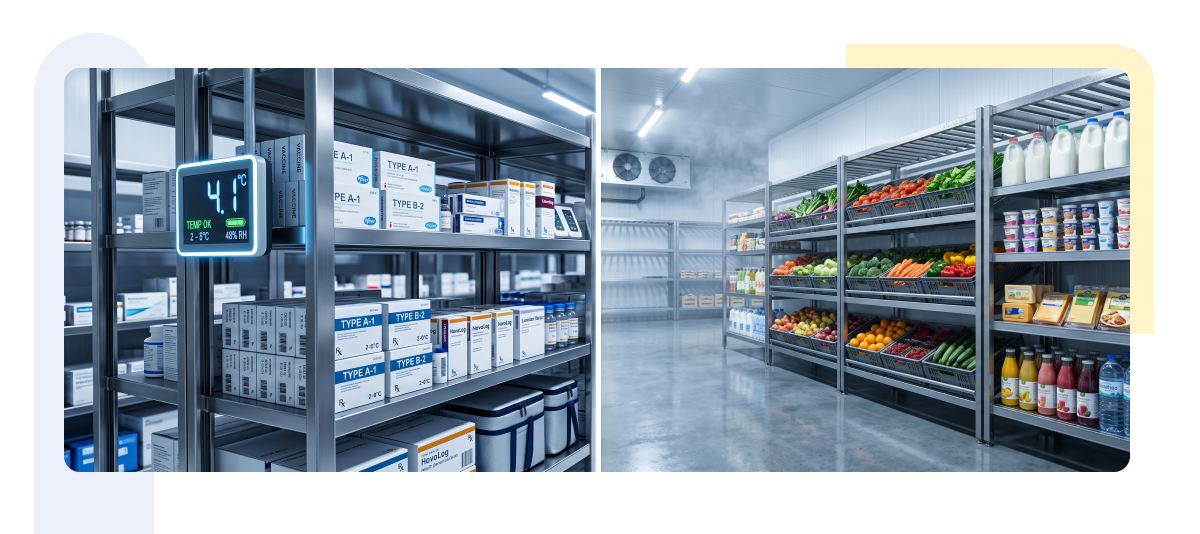
Each unit contains compartments held at defined temperature bands. Chilled zones typically operate from 2°C to 8°C, covering most pharmaceuticals, dairy, and produce. Frozen zones hold -18°C or below. Many deployments combine chilled, frozen, and ambient compartments in a single bank, allowing one locker to absorb a complete mixed order.
The operational logic is simple. A courier or associate loads the order into an appropriately cooled compartment; the customer collects it whenever convenient; the product remains within its required temperature range throughout. Because the recipient no longer needs to be present, first-attempt delivery success rises; redelivery trips fall, and spoilage-driven refunds decline.
How refrigerated smart lockers work
The workflow follows five steps:
- Delivery arrives. The courier or store associate authenticates at the terminal and scans the order.
- Goods are loaded. The system assigns a compartment matched to the order’s size and temperature requirement.
- Temperature is maintained automatically. Sensors monitor each cooled zone continuously and log readings; out-of-range drift triggers alerts before stock is compromised.
- The customer is notified. An OTP, QR code, or app notification confirms that the order is ready.
- The customer collects. Authentication at the terminal opens the correct door. Pickup takes under a minute.
Security and traceability underpin every step. Access is bound to the specific order, so only the intended recipient can open the compartment. Every event is logged: who accessed which door, when, and with what credential. For prescription medicines, deployments can add stronger verification before release. The result is a complete chain-of-custody record, including the temperature held at every point between drop-off and collection.
Use cases across industries
Pharmacy
Pharmacy is where the value case is strongest, because the stakes extend beyond convenience to patient safety.
Insulin, vaccines, biologics, and a growing share of specialty drugs require storage at 2°C to 8°C. Once outside controlled conditions, efficacy degrades with no visible indication. A pharmacy delivery locker with refrigeration lets pharmacists dispense into a compliant environment and transfer control of pickup timing to the patient.
The operational implications are significant. After-hours demand shifts from the counter to the locker, so chains serve evening and weekend pickup without extending staffing. Pharmacists reallocate time from repeat transactions to clinical work. And friction at pickup, a leading driver of prescription abandonment, is removed. Hospital campuses gain further use cases: round-the-clock discharge medication collection without a staffed pharmacy window.
Grocery
For grocers, the challenge is order complexity. A single basket routinely spans fresh produce, dairy, frozen food, and ambient pantry items, each with different storage requirements.
A grocery pickup locker with multiple temperature zones resolves this in one asset. Staff pick and load once; the customer collects the full order in a single stop, at any hour, without queues or delivery windows. Meal kit providers and dark stores apply the same model at apartment complexes, offices, and transit hubs. Consolidating dozens of doorsteps drops into fewer, fuller trips to fixed points. The effect is a structurally lower cost per order in the last mile, paired with the pickup flexibility that converts first-time online grocery customers into repeat ones.
Why temperature monitoring matters
Cooling a compartment is straightforward. Proving the temperature held is what makes a cold chain locker an asset a regulated business can rely on. Monitoring matters on four dimensions:
Product integrity. For food, temperature abuse accelerates spoilage and safety risk. For medications, it reduces potency invisibly. Continuous monitoring is the only reliable control.
Compliance. Food safety regulations and good distribution practice both require documented temperature control through the chain of custody. When the locker logs conditions and access events automatically, audit-ready documentation exists by default.
Dispute resolution. If a customer reports a spoiled order, the operator can verify compartment temperature and door-open times in seconds. Data settles claim quickly and fairly.
Waste reduction. Drift alerts allow intervention before stock is lost. Across hundreds of monthly orders, avoided spoilage compounds into material savings, and consistent product quality protects the customer’s trust that perishable delivery depends on.
Benefits of refrigerated smart lockers
The business case for perishable delivery automation typically rests on the following:
- 24/7 pickup on the customer’s schedule, not the store’s
- Fewer missed deliveries, since the recipient need not be present
- Reduced spoilage, with products held in range from drop-off to collection
- Lower operating cost through fewer redeliveries, refunds, and staffed handovers
- Secure storage with compartment-level access control and full event logging
- Improved delivery efficiency, as couriers serve one location instead of many addresses
- Better customer experience through fast, contactless, queue-free collection
- Scalability, with the same model extending from one site to a full network
Adoption tends to be rapid because customers already understand lockers. Refrigeration simply widens what they can carry.
What to consider before deploying refrigerated smart lockers
Refrigerated deployments demand more rigor than ambient ones. Ten questions shape a sound decision:
- Temperature ranges. Chilled only, or chilled plus frozen? Pharmacies may need tight 2°C to 8°C control with alarm thresholds.
- Capacity and compartment mix. Size against order volume, peak demand, and dwell time; match compartment sizes to real baskets.
- Software integration. The platform should connect to order management, pharmacy, or e-commerce systems, so notifications and assignments flow automatically.
- Monitoring. Require continuous logging, configurable alerts, and remote visibility across all sites.
- Power backup. Understand hold times during outages and how the system escalates.
- Security. Assess site surveillance, tamper detection, and credential lifecycle.
- Maintenance. Clarify servicing schedules, fault detection, and response commitments.
- Reporting. Confirm outputs meet your regulatory and audit requirements.
- User experience. The pickup flow must work for a first-time user in seconds, in the right languages, with accessible placement.
- Location. High-footfall, easy-access sites work hardest; indoor and outdoor placements carry different power and environmental demands.
A disciplined two-site pilot will surface more insight than a rushed network rollout.
The future of cold chain delivery
Three forces point in one direction. Online pharmacy continues to grow as prescriptions shift to digital channels. Online grocery has settled into durable growth, and the expectations formed during its surge have not reset. And omnichannel retailers increasingly treat stores, dark stores, and pickup points as one network, in which lockers serve as low-cost, always-open collection nodes.
Temperature control extends that network to the categories previously excluded from it. Meanwhile, developers and municipalities are designing shared pickup infrastructure into residential and mixed-use projects, much as parcel rooms became standard in apartments over the past decade. Contactless, automated pickup is following the same path.
None of this depends on speculative technology. The refrigeration, access control, and software are mature. What is changing is the economics: as perishable and pharmaceutical delivery volumes rise, unattended temperature-controlled pickup shifts from differentiator to baseline expectation.
Closing the last hundred meters
Cold chain logistics has spent decades perfecting control in warehouses, vehicles, and stores. The final hundred meters, between delivery and the customer’s hands, remained at the loose end. Refrigerated smart lockers close it. Pharmacies gain compliant, round-the-clock medication pickup. Grocers gain a practical answer to the mixed-temperature order. Customers gain the flexibility they now treat as standard.
For leaders evaluating cold chain automation, the case rests on familiar metrics: higher first-attempt success, lower spoilage, reduced last-mile cost, and stronger retention. The technology is proven and the demand is already present.
Smartbox helps organizations automate secure pickup and delivery workflows through smart locker solutions, with the flexibility to support temperature-controlled applications alongside standard parcel and asset use cases. For teams with cold chain pickup on the roadmap, the placement and integration decisions are easiest to shape early.