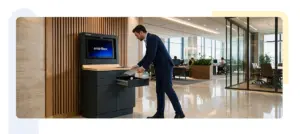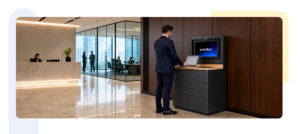


If you’ve ever wondered what the future of smart delivery looks like, you may not have to look very far. Smart locker technology is already changing the way businesses think about storage, deliveries, access and logistics.
What once looked like a simple locker can now connect physical storage with digital access, real-time tracking, notifications and management software. The experience for the user may still feel simple, but there is considerably more happening behind the locker door.
Artificial intelligence is taking this technology a step further. From understanding usage patterns and predicting demand to supporting smarter access control and automation, AI is helping smart locker systems become more responsive to the people and businesses that use them.
In this article, we explore how smart locker technology works, where AI fits into the picture, and how these technologies are shaping the future of secure, connected storage.
What is Smart Locker Technology?
A smart locker is more than a locker with an electronic lock.
Smart locker technology brings together physical compartments, digital access controls, connectivity, and software to create a more connected way of storing, collecting and managing items. Unlike traditional lockers, smart lockers can track activity, manage access, and communicate information to both users and administrators.
Depending on where they are being used, people may access smart lockers through QR codes, PINs, RFID, mobile credentials, or other forms of authentication. Behind that simple interaction is a connected system that can record activity, manage permissions, and provide a clearer view of locker usage.
This makes smart lockers useful across a range of environments. They can support package collection in residential communities, click-and-collect in retail, asset management in workplaces, and secure storage across logistics, education and other industries.
At its core, a smart locker is a secure way to store, access and manage items without relying entirely on physical keys or manual handovers. The technology brings together secure storage, digital access and connected software, making the locker part of a larger system rather than simply a place to keep something.
How Does Smart Locker Technology Work?
The experience of using a smart locker is deliberately simple. The technology working behind it is a little more interesting.
Smart lockers typically combine electronic locking mechanisms, authentication technology, connectivity, and cloud-based management software. When an item is placed inside a compartment, the system can assign that compartment and provide the intended recipient with the information needed to access it.
When the recipient arrives, they can authenticate themselves using a QR code, PIN, RFID credential, mobile device, or another supported method. Once the credentials are verified, the relevant compartment opens.
The management software keeps track of these interactions in the background. Administrators can see locker availability, monitor activity, and manage access without having to physically check every compartment. In busy environments, this can improve efficiency while reducing the amount of manual work involved in managing deliveries, assets, or stored items.
This is also what makes smart lockers work so differently from a traditional locker. The physical compartment is only one part of the experience. The software, authentication and connected systems working behind it allow the locker to respond to each interaction, record what happens and give administrators a clearer view of the entire network.
What Are the Benefits of Smart Locker Technology?
The appeal of smart lockers is not really the word smart. It is what intelligence makes possible.
Improved efficiency: Routine tasks such as handing over packages, managing access or tracking stored items can be automated, helping teams spend less time on repetitive work.
Greater visibility: Connected lockers can provide information about usage, availability and access, giving administrators a clearer picture of what is happening without having to check each locker manually.
More secure access: Digital authentication allows access to be given to the right person without relying entirely on physical keys. Activity records can also provide an additional layer of accountability.
A more convenient experience: Users can collect or access items when it suits them, without always having to wait for a member of staff to be available.
Easier to scale: As businesses add locations or handle more deliveries and assets, connected locker systems can provide a manageable way to expand storage and access without increasing manual processes at the same pace.
Let’s decode the future – one locker at a time.
These benefits become more meaningful as locker networks grow. What may seem like a small improvement at one locker can translate into considerable time savings and better visibility when the same system is managing hundreds or thousands of interactions. This is where smart locker technology begins to move beyond convenience and into operational efficiency.
Industry Overview: The Smart Locker Landscape in 2025
If you’ve been tracking how storage and delivery solutions have evolved, you’ll know smart lockers are no longer just simple storage boxes. In 2025, they’ve transformed into intelligent storage systems that power efficiency and security across industries like retail, logistics, healthcare, and education, while digitizing access to goods and parcels.
The global smart locker market is on a rocket trajectory, set to exceed USD 9 billion by 2032 with a strong growth rate of over 15% annually. What’s driving this boom? Several key factors are reshaping the landscape:
- The relentless rise of e-commerce is fueling last-mile delivery innovation
- Growing demand for AI for contactless locker solutions in a post-pandemic world
- Rapid urbanization is pushing the need for smart infrastructure and compact, efficient secure storage
Today’s smart lockers are much more than storage spaces. They combine real-time tracking, AI-powered automation, smart locks and digital access controls to create a more connected experience. Users can authenticate securely, while businesses gain greater visibility into locker activity and usage.
Key AI Applications Driving Smart Locker Automation in 2025
The secret sauce behind the smart locker revolution? It’s AI – the powerhouse driving innovation and transforming how lockers operate at every level. Let’s break down the top ways AI in smart locker systems 2025 is reshaping this space:
- Automation: Making Storage Smarter and Simpler
AI fuels the shift from manual to AI-driven smart locker automation, making storage and retrieval effortless and reliable. Here’s how it’s changing the game:
- Automated Storage and Retrieval: With AI at the helm, smart lockers can handle storing, tracking, and retrieving parcels or assets automatically, slashing labor costs and virtually eliminating manual errors. This is the future of corporate delivery automation and logistics efficiency.
- Contactless Access: Leveraging smart lockers with facial recognition AI, biometric scans, and secure mobile app authentication, users enjoy fast, touch-free access. This AI-powered security system is perfect for today’s hygiene-conscious world and supports contactless delivery solutions that boost customer trust.
- Real-Time Analytics: Unlocking Insights and Efficiency
Real-time data is the new gold, and AI turns it into actionable insights that enhance operations: The value of real-time data is not simply in seeing what has happened. It is in being able to respond while something is happening. For a growing locker network, that visibility can help teams make quicker decisions around availability, maintenance, access and day-to-day operations.
- Operational Intelligence: AI algorithms continuously analyze locker usage patterns and predict maintenance needs, ensuring lockers are always operational when you need them most. This proactive approach is key to improving operational efficiency across smart locker networks.
- User Behavior Analytics: By understanding how customers interact with lockers, businesses can optimize locker placement, predict demand surges, and tailor services, fueling smarter decisions in retail and logistics.
- Dynamic Access Control: AI instantly adjusts permissions, alerts users when deliveries arrive, and flags suspicious activity. These AI-based locker access control systems create a secure, seamless user experience that elevates trust and convenience.
- Robotics Integration: The Next Step in Automation
AI-powered lockers are no longer isolated – they’re integral to the expanding IoT ecosystem, interacting with robotics to push the boundaries of automation:
- Automated Asset Flows: In warehouses and factories, AI enables robots to directly interface with smart lockers, automating the flow of tools, parts, and products. This integration revolutionizes intelligent locker systems in manufacturing and logistics.
- IoT Connectivity: Smart lockers now communicate with delivery robots, autonomous vehicles, and building management systems, creating a unified, efficient network. This blend of AI and IoT in smart locker solutions sets the stage for truly smart infrastructure and smart city logistics.
The Future of AI and Smart Locker Technology
Looking ahead, the synergy between AI and smart locker systems is poised to drive a new wave of innovation that will reshape industries and redefine convenience. Here’s what the future holds for AI-powered smart delivery lockers in 2025 and beyond:
Predictive Maintenance Becomes the Norm
Say goodbye to unexpected breakdowns. With AI-powered automation, smart lockers will self-diagnose issues before they occur, scheduling maintenance autonomously. This evolution in AI use cases in smart parcel lockers means less downtime, better reliability, and lower operational costs – a win for both businesses and users.
Smart City Integration
Imagine a future where smart lockers are as integral to city life as public Wi-Fi. We’re heading toward a world where lockers are seamlessly embedded into smart infrastructure, communicating with transit systems, surveillance networks, and energy grids. This trend reflects the growing importance of AI and IoT integration in building responsive, intelligent urban ecosystems.
Greener, Smarter, Cleaner
Sustainability is no longer optional – it’s essential. AI will drive smart locker technology to optimize delivery routes, manage locker availability, and reduce idle energy usage. The result? Lower emissions and a meaningful contribution to smart city logistics and eco-friendly delivery innovation.
Customization and Scalability at the Core
Whether it’s a hospital, a retail chain, or a university campus, future smart lockers will be tailor-made for their environment. Thanks to AI in facility management and logistics, these systems will be endlessly flexible, scaling operations, adapting features, and even learning new workflows specific to their surroundings.
Security Gets Smarter
From AI-based locker access control systems to next-gen biometrics and encrypted communication protocols, security is about to reach an entirely new level. Expect smart lockers with facial recognition AI and real-time threat detection as standard. This is the future of secure parcel delivery powered by AI applications in secure locker systems. As access becomes increasingly digital, the idea of a locker as secure storage is evolving too. Security is no longer limited to the lock itself; it increasingly involves authentication, software, data and the systems that connect them.
Full Robotics Automation
The merging of AI in logistics with robotics will usher in fully autonomous locker ecosystems, particularly in manufacturing and large-scale distribution. Imagine robots managing entire locker banks, syncing with inventory, and coordinating with transport vehicles. It’s not sci-fi – it’s happening now in the most advanced autonomous parcel lockers.
Conclusion: The Future of Smart Locker Technology
Smart lockers began with a simple idea: give people a secure place to collect, store or return something without having to rely on another person.
Technology has grown considerably since then. Today, smart locker systems can connect hardware, digital access, management software, real-time data, and automated workflows. AI is now beginning to make these systems even more responsive, helping businesses understand how lockers are being used and where every day processes can be made simpler.
The interesting part is that the technology does not need to feel complicated to the person using it. In fact, the best smart locker experience may be the one that feels almost ordinary: the right compartment opens, the item is there, and the person goes on with their day.
That is perhaps where the future of smart locker technology is heading. More intelligence behind the scenes, and a simpler experience in front of them.
Perhaps that is what makes the evolution of locker technology interesting. The technology behind the experience is becoming more intelligent, while the experience itself can remain wonderfully simple. A user still approaches a locker, gains secure access and collects what is theirs. The difference is everything working quietly behind that moment.